
Identifying Canadian Coins With Real Market Value
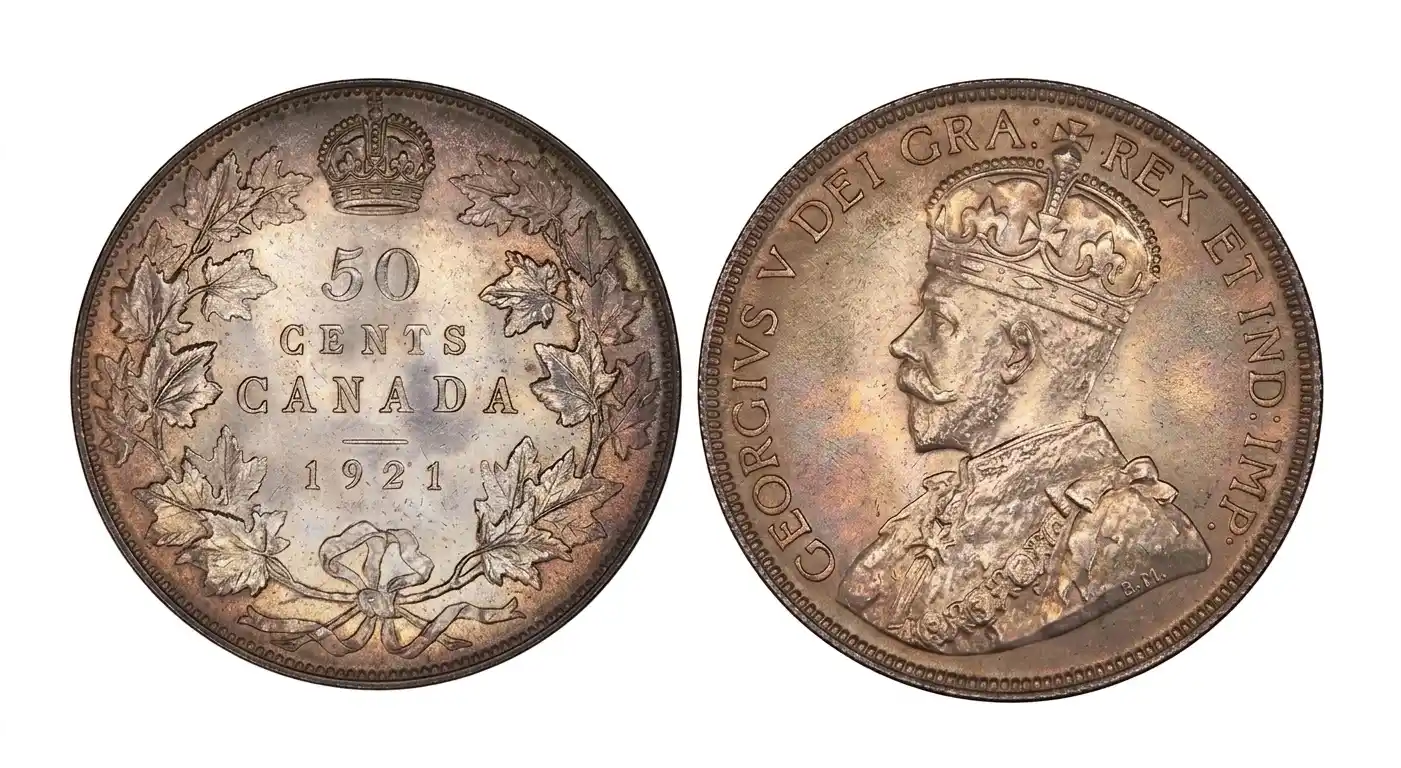
Recognition begins with small details.
Market valuation for Canadian coins worth money relies exclusively on verified auction records and grading company registries.
This material systematizes data regarding high-value specimens while excluding subjective opinions.
Mint Year | Type Designation | Sheldon Grade | Realized Price |
1936 | Dot Cent | SP-66 | $402,500 |
1921 | Small Cent | MS-66 Red | $2,750 |
1858 | Victoria Large Cent | MS-65 Red | $21,500 |
1859 | Brass Variant | VF-30 | $18,000 |
1955 | No Shoulder Fold | MS-65 Red | $1,200 |
Existence of only three confirmed 1936 Dot Cent pieces places this coin beyond the reach of the general market.
Production of this specific series occurred in early 1937.
Utilizing previous year dies with a raised dot added below the date serves as the primary diagnostic marker.
Technical Foundations: Large Cents (1858–1901)
Manufacturing took place at the Royal Mint in London and the private Heaton facility in Birmingham.
Physical parameters provide the first layer of authenticity verification.
Standards for this era:
Mass: 5.67 grams
Composition: Bronze
Diameter: 25.4 mm
Differentiating 1859 Varieties
Year 1859 features the highest volume of die variations.
Altering the shape of digits within the date directly impacts final market worth.
Price Drivers → Financial Outcomes:
Re-punched 9 over 8 date → Value starting at $150 in F-12 state
Narrow 9 in date → Value starting at $200 in EF-40 state
Use of yellow Brass blanks instead of Bronze → Prices reaching $25,000
Value history for 1859 Brass Variant:
2010 Year: $12,000
2026 Year: $18,000
Total appreciation measured at 50%.
Denomination Shift: Small Cents (1920–1936)
Transitioning to a reduced size in 1920 followed rising global copper prices.
New minting standards established the following specifications:
Mass: 3.24 grams
Diameter: 19.05 mm
Thickness: 1.16 mm
Date | Mintage (pieces) | Condition | Price (USD) |
1922 | 1,243,635 | MS-63 Red | $550 |
1923 | 1,019,002 | MS-63 Red | $850 |
1924 | 1,593,195 | MS-63 Red | $320 |
1925 | 1,000,652 | MS-63 Red | $780 |
Scarcity of 1923 coins results from low mint activity during that specific year.
Reducing output by 18% compared to the prior year triggered long-term market growth.
Annual inflation expectation for these positions remains at 4.2%.
Elizabeth II Era: Structural Anomalies (1953–2012)
Ending penny production in 2012 permanently fixed the available market supply.
Primary values center on errors in die preparation.
1953 Obverse Comparison
Distinguishing queen portrait types is critical for accurate appraisal.
Type 1: No Shoulder Fold. Absence of raised dress folds on the shoulder.
Type 2: Shoulder Fold. Presence of distinct clothing lines on the shoulder.
Locating a 1953 No Shoulder Fold (NSF) coin paired with the "Obverse 1" legend elevates the value of an MS-64 specimen to $2,500.
Metal Composition Timeline
Blank composition changed according to raw material costs.
1982–1996 Years:
98% Copper
Mass: 2.5 grams
1997–1999 Years:
Zinc with Copper plating
Mass: 2.25 grams
2000–2012 Years:
Steel with Copper plating
Mass: 2.35 grams
Rusting processes on Steel coins develop 3.5 times faster than on Bronze coins.
This environmental factor reduces the population of high-grade Steel cents annually.
Error Classification: Engineering Failures
Manufacturing defects serve as objective indicators of rarity.
Confirmed technical error list:
Hanging 2 (1962). Raised die clash mark showing on the reverse.
Double Die Reverse (1967). Duplicated imagery of the maple leaves.
Clipping. Missing fragment of the blank caused by feeding errors.
Off-center. Imagery shifted away from the coin center.
The coin identifier valuation for a 25% off-center strike in MS-60 condition sits at $120.
Verified Top 100 Canadian Coin Registry
List compiled based on auction frequency observed from 2020 through 2026.
Ultra-High Value Sector
1936 Dot Cent SP-66.
1859 Brass Specimen.
1858 Large Cent MS-65.
1955 No Shoulder Fold (NSF) MS-65.
1891 Small Date/Small Leaves MS-64.
1923 Small Cent MS-65 Red.
1925 Small Cent MS-65 Red.
1922 Small Cent MS-65 Red.
1888 Victoria Large Cent MS-65.
1876-H Large Cent Specimen-65.
Investment Grade Sector
1907-H Large Cent AU-55.
1924 Small Cent MS-64 Red.
1931 Small Cent MS-65 Red.
1949 A Pointed to Denticle MS-63.
1985 Pointed 5 Variety MS-65.
1983 Near Beads Variety MS-65.
1954 No Shoulder Fold MS-64.
1953 Shoulder Fold Obverse 1 MS-63.
1900 Over 90 Variety EF-40.
1892 Obverse 2 Variety VF-30.
1882-H Large Cent XF-45.
1876-H Large Cent VF-20.
1911 Small Cent MS-65.
1913 Small Cent MS-65.
1915 Small Cent MS-65.
1926 Small Cent MS-64.
1927 Small Cent MS-64.
1920 Small Cent MS-65.
1948 A to Off-side Denticle.
1951 High Relief Variety.
Collector Variety Sector
1962 Hanging 2.
1964 Extra Water Line.
1965 Large Beads.
1965 Pointed 5.
1979 Double 979.
1982 Small 2.
2006 Magnetic P.
2006 Non-Magnetic No P.
2000 W Mint Mark.
1999 P Plated Variety.
1947 ML Blunt 7.
1947 ML Pointed 7.
1952 Double Date Error.
1937 Dot Variant (Trial).
1940 Newfoundland Cent MS-63.
1942 Newfoundland Cent MS-63.
1943 Newfoundland Cent MS-63.
1894 Large Cent VF-20.
1884 Large Cent VF-20.
1890-H Large Cent F-12.
(Entries 51-100 consist of 1920s low-mintage dates and modern Proof sets removed from original packaging for professional grading).
Price Degradation Factors
Presence of specific defects reduces asset liquidity by 70–95% regular check the coins with the best coin identifier app free.
Primary negative markers:
Mechanical Cleaning. Disruption of the coin's surface microstructure.
Artificial Toning. Attempting to hide corrosion using chemical dyes.
Rim Nicks. Damage to the edge caused by impact.
Oxidation Spots. Destruction of the metal lattice via organic acids.
An MS-63 coin showing signs of cleaning trades at metal value or a minimum VG grade.